
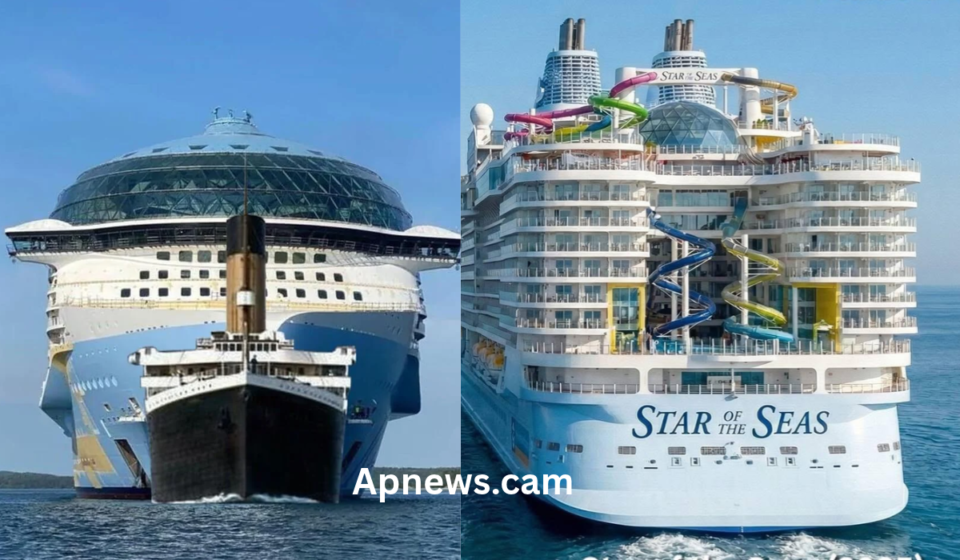

The RMS Titanic was one of the most impressive passenger ships in the world when it began its maiden voyage in April 1912. More than a century later, cruise ships have become much larger, more luxurious, and more technologically advanced. Some of today’s biggest vessels can carry thousands more passengers and offer attractions that would have been unimaginable during the Titanic era.
When Cruises Compared to Titanic is the topic, the differences go far beyond length and passenger capacity. Modern ships feature enormous entertainment areas, multiple swimming pools, advanced navigation systems, and extensive safety equipment. The Titanic, meanwhile, was designed primarily to transport passengers across the Atlantic in comfort and style. Comparing these vessels reveals how maritime engineering has evolved and why today’s cruise ships are often described as floating resorts.
Quick Facts: Titanic vs Modern Cruise Ships
| Feature | RMS Titanic | Icon of the Seas |
| Maiden voyage or debut | April 1912 | January 2024 |
| Length | 882 feet | Approximately 1,196 feet |
| Width | 92.5 feet | Approximately 159 feet |
| Gross tonnage | 46,328 GT | 248,663 GT |
| Passenger capacity | Around 2,435 | Up to 7,600 |
| Crew capacity | Around 900 | Approximately 2,350 |
| Main purpose | Transatlantic transportation | Leisure and vacations |
| Major facilities | Dining rooms, gym, swimming pool | Water parks, pools, theaters, restaurants |
Figures are approximate. Passenger capacities depend on the ship’s configuration, and gross tonnage measures enclosed volume rather than a vessel’s weight.
How Much Bigger Are Modern Cruise Ships Than the Titanic?
Modern cruise ships have grown considerably since the Titanic was built. One of the best examples is Icon of the Seas, a Royal Caribbean vessel that entered service in 2024.
At approximately 1,196 feet long, Icon of the Seas is about 314 feet longer than the Titanic. It is also much wider, measuring approximately 159 feet compared with the Titanic’s 92.5 feet.
The difference is even more dramatic when comparing gross tonnage. The Titanic measured around 46,328 gross tons, while Icon of the Seas measures approximately 248,663 gross tons. This means the modern ship has more than five times the Titanic’s enclosed volume.
However, not every modern cruise ship is larger than the Titanic. Smaller cruise vessels and expedition ships may have substantially smaller dimensions. The comparison depends on the individual ship and the measurement being used.
Length and Width: A Major Difference
The Titanic measured approximately 882 feet from bow to stern. At the time, this made it one of the world’s largest passenger liners and a remarkable achievement in shipbuilding.
Today’s largest cruise ships extend well beyond 1,000 feet. Their additional length creates space for more cabins, restaurants, public areas, and entertainment facilities.
Width is equally important. A wider vessel offers more room for swimming pools, shopping areas, indoor attractions, and passenger lounges. Modern cruise ship designers use this space to create multiple entertainment zones across several decks.
The Titanic was designed around the needs of long-distance ocean travel. Modern cruise ships are designed to provide a wide variety of experiences throughout a vacation, which explains their broader layouts and extensive onboard facilities.
Passenger Capacity: How Many People Can They Carry?
Passenger capacity is another striking difference between the Titanic and today’s largest cruise ships.
The Titanic was designed to accommodate approximately 2,435 passengers, although fewer passengers were aboard during its maiden voyage. Its crew numbered around 900 people.
By comparison, Icon of the Seas can carry up to approximately 7,600 passengers at maximum capacity, with a crew of around 2,350. This means the modern vessel can accommodate more than three times the Titanic’s intended passenger capacity.
Modern ships achieve this through larger dimensions, additional decks, more cabins, and extensive shared facilities. Their designs also reflect the popularity of family vacations, group travel, and onboard entertainment.
Accommodating thousands of people requires sophisticated systems for food service, drinking water, sanitation, waste management, and emergency response. These systems are an essential part of modern cruise ship engineering.
Ocean Liner vs Floating Resort
The Titanic and modern cruise ships were designed for different purposes. Understanding this distinction helps explain why their layouts and onboard experiences are so different.
The Titanic was an ocean liner intended primarily for scheduled journeys across the Atlantic Ocean. It was designed to transport passengers between Europe and North America, combining practical transportation with luxurious accommodation for its wealthiest travelers.
Modern cruise ships focus mainly on leisure. Their itineraries include ports of call, but the ship itself is also a major part of the vacation experience.
Passengers can enjoy restaurants, swimming pools, live entertainment, sports, shopping, and recreational activities without leaving the vessel. On some ships, the range of attractions resembles that of a large resort.
This change in purpose has influenced nearly every aspect of modern cruise ship design, from cabin layouts to deck space and onboard services.
Amenities: What Did the Titanic Offer?
The Titanic offered impressive facilities for the early twentieth century. First-class passengers could enjoy elegant dining rooms, lounges, a gymnasium, a squash court, Turkish baths, and a swimming pool.
These amenities made the ship a symbol of luxury, although access to facilities and accommodation varied by passenger class. Third-class passengers had much simpler accommodations and shared facilities.
Today’s large cruise ships offer a much wider selection of activities and services. Depending on the vessel, passengers may find:
- Water parks and large water slides.
- Multiple swimming pools and whirlpools.
- Theaters featuring live shows and musical performances.
- Fitness centers, spas, and sports courts.
- Numerous restaurants, cafés, and specialty dining venues.
- Children’s clubs and family entertainment areas.
- Shopping promenades and expansive public spaces.
- Surf simulators or ice skating rinks on selected ships.
Modern cabins also commonly feature private bathrooms, while many offer balconies overlooking the ocean. These facilities reflect changing expectations and advances in ship design.
Safety Technology: Titanic vs Modern Cruise Ships
Safety is one of the most important areas in which maritime travel has changed since 1912.
The Titanic struck an iceberg on April 14, 1912, and sank during the early hours of April 15. More than 1,500 people died in the disaster. The tragedy exposed serious weaknesses in lifeboat capacity, emergency preparedness, and maritime safety practices.
The Titanic carried 20 lifeboats, providing space for approximately 1,178 people. This was not enough for everyone aboard.
The disaster helped drive improvements in international maritime regulations, including the International Convention for the Safety of Life at Sea, commonly known as SOLAS. These rules cover important aspects of ship construction, lifesaving equipment, communications, and emergency procedures.
Modern cruise ships use advanced navigation and safety systems, including satellite positioning, electronic charts, radar, weather monitoring, emergency communications, and fire detection systems. They also carry lifesaving equipment in accordance with applicable regulations.
These advances significantly improve safety and emergency preparedness. Nevertheless, no vessel is completely risk-free. Proper maintenance, crew training, weather awareness, and sound navigation decisions remain essential.
Construction and Engineering: Then and Now
The Titanic relied on steam-powered propulsion, large reciprocating engines, and a steam turbine. Its construction reflected the industrial technology available in the early 1900s.
Modern cruise ships generally use advanced propulsion and power systems, often including diesel-electric arrangements. Some newer vessels use liquefied natural gas as a fuel, while the industry continues to investigate other ways to reduce environmental impacts.
Contemporary shipbuilders also use computer modeling, improved structural analysis, modern materials, and advanced monitoring systems. These technologies help engineers plan large vessels with complex interiors and multiple passenger decks.
Building a large cruise ship involves more than increasing its dimensions. Engineers must consider stability, structural strength, energy requirements, passenger comfort, environmental performance, and the ability to operate safely in different sea conditions.
The evolution from the Titanic to modern cruise ships demonstrates how engineering has adapted to changing technology and passenger expectations.
Is the Titanic Bigger Than an Average Modern Cruise Ship?
The answer depends on which modern ship is being compared. Some cruise ships are shorter or smaller by gross tonnage than the Titanic, while many contemporary vessels are substantially larger.
For example, a modern ship measuring 100,000 gross tons has more than twice the Titanic’s enclosed volume. However, a smaller expedition cruise ship may have far less interior space.
Length alone does not tell the complete story. A ship can be relatively long but narrow, while another may be shorter and considerably wider. Gross tonnage helps explain the difference in overall enclosed space.
For this reason, comparisons should consider length, width, gross tonnage, and passenger capacity together rather than relying on a single measurement.
Why Modern Cruise Ships Look Different From the Titanic
The Titanic had a long, relatively slender profile, with a traditional ocean liner design and a prominent bow. Its appearance reflected its primary role in long-distance passenger transportation.
Modern cruise ships often have much broader upper decks and large superstructures. Their external layouts must accommodate pools, open-air recreation areas, restaurants, and other passenger facilities.
They also have to meet modern expectations for accessibility, comfort, entertainment, and efficient onboard operations. These requirements influence the shape and layout of the vessel.
Although both types of ships are built for ocean travel, their designs reflect very different priorities. The Titanic represented luxury transportation, while modern cruise ships combine transportation with a comprehensive leisure experience.
Frequently Asked Questions About Cruises Compared to Titanic
1. How many times bigger is Icon of the Seas than the Titanic?
By gross tonnage, Icon of the Seas is approximately 5.4 times larger than the Titanic. This measurement compares enclosed volume, not physical weight.
2. Is Icon of the Seas longer than the Titanic?
Yes. Icon of the Seas measures approximately 1,196 feet, while the Titanic was about 882 feet long. The modern ship is roughly 314 feet longer.
3. How many passengers could the Titanic carry?
The Titanic was designed to accommodate approximately 2,435 passengers. The actual number aboard varied by voyage.
4. How many passengers can the largest cruise ships carry?
The largest modern cruise ships can accommodate around 7,600 passengers at maximum capacity. Many other cruise ships have lower passenger limits.
5. Was the Titanic considered large in 1912?
Yes. The Titanic was among the largest passenger ships in the world when it entered service. Its size, engineering, and luxurious first-class facilities attracted considerable attention.
6. Are modern cruise ships safer than the Titanic?
Modern vessels benefit from improved safety regulations, navigation systems, emergency communications, and lifesaving equipment. However, safety still depends on maintenance, training, and responsible ship operations.
7. Is gross tonnage the same as a ship’s weight?
No. Gross tonnage is a measure of a ship’s enclosed internal volume. Displacement is a different measurement related to the weight of the water displaced by the vessel.
8. Why are modern cruise ships designed like floating resorts?
Modern cruise ships are built primarily for leisure and vacation experiences. Their facilities include entertainment, dining, recreation, and accommodation, making the ship itself a major part of the holiday.
Conclusion
The comparison of Cruises Compared to Titanic shows just how far shipbuilding has advanced over the past century. The Titanic was an extraordinary ocean liner for its time, but today’s largest cruise ships are much wider, longer, and larger by gross tonnage. They can accommodate thousands more passengers and provide extensive entertainment facilities.
Modern ships also benefit from significant advances in navigation, engineering, communication, and maritime safety. At the same time, the Titanic remains an important historical milestone that helps us understand the progress of ocean travel.
Ultimately, the biggest difference is not just size. It is the transformation from a luxurious passenger liner built for transatlantic transportation to a modern floating resort designed around the entire vacation experience.