
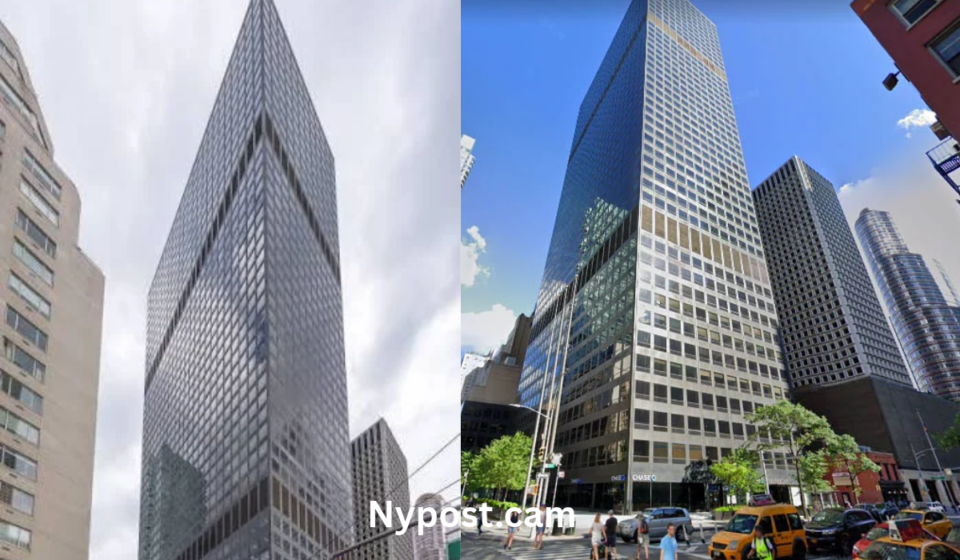

919 3rd Avenue New York is a notable commercial skyscraper in Midtown Manhattan, recognized for its modern architecture, prominent business tenants, and fascinating connection to one of the city’s historic saloons. Completed in 1971, this 47-story office tower reflects the transformation of Manhattan into a major center for business, finance, and professional services. Its glass-and-steel design gives it a distinctive place in the surrounding cityscape, while its history includes an unusual development story involving the famous P.J. Clarke’s saloon. The building is also associated with an important chapter in New York City’s high-rise fire safety history. From its architectural features and office facilities to its location and historical significance, 919 3rd Avenue New York offers an interesting example of how modern commercial development and traditional New York character can exist side by side.
Quick Facts About 919 3rd Avenue New York
| Feature | Details |
| Building Name | 919 Third Avenue |
| Location | Midtown Manhattan, New York City |
| Street Address | 919 Third Avenue, New York, NY |
| Height | Approximately 615 feet |
| Floors | 47 |
| Completion Year | 1971 |
| Architectural Firm | Skidmore, Owings & Merrill (SOM) |
| Architectural Style | International Style / Modernist |
| Owner | SL Green Realty Corp. |
| Main Purpose | Commercial office space |
| Famous Nearby Establishment | P.J. Clarke’s saloon |
| Notable Features | Modern office facilities, outdoor plaza, and sustainability credentials |
The History of 919 3rd Avenue New York
The story of 919 3rd Avenue New York is closely connected to Manhattan’s growth as a leading commercial destination during the second half of the 20th century. As businesses expanded and demand for modern office space increased, developers began investing in taller buildings designed to accommodate large companies and professional organizations.
Completed in 1971, the tower became part of this period of urban development. Its construction reflected the growing popularity of efficient office layouts, modern building materials, and architectural designs that emphasized functionality over elaborate decoration.
However, the building’s history is not limited to commercial expansion. A serious fire during its construction in December 1970 brought attention to the risks associated with high-rise buildings and helped shape discussions about fire prevention and emergency safety in New York City.
Today, the property represents both the ambition of Manhattan’s commercial development and the lessons learned from its construction-era challenges.
Architecture and Design of the Building
The architecture of 919 3rd Avenue New York reflects the principles of modernism and the International Style. These architectural movements emphasize clean lines, practical layouts, and materials such as glass and steel.
Designed by Skidmore, Owings & Merrill, the building was created to serve the needs of a busy commercial district. Its tall profile and modern exterior allow it to fit naturally into the surrounding Midtown skyline, where office towers are an important part of the urban landscape.
The building’s design also prioritizes usable interior space. Commercial properties must accommodate different types of businesses, from financial companies and law firms to technology teams and administrative offices. Practical floor plans allow tenants to arrange their workspaces according to their operational requirements.
Location and Surrounding Neighborhood
One of the strongest advantages of 919 3rd Avenue New York is its Midtown Manhattan location. The building stands at Third Avenue and East 55th Street, placing it within a well-established business district with access to restaurants, professional services, shops, and transportation options.
For employees and visitors, the surrounding neighborhood offers a range of everyday conveniences. Nearby businesses provide opportunities for lunch meetings, after-work dining, and routine errands without requiring a long journey from the office.
Midtown Manhattan also attracts businesses because of its concentration of corporate offices and professional organizations. Companies operating in this area can benefit from proximity to clients, partners, and other institutions that support their work.
The location therefore contributes to the building’s commercial appeal, making it a recognizable office address within New York City’s broader business environment.
The Famous Connection With P.J. Clarke’s
One of the most memorable aspects of 919 3rd Avenue New York is its relationship with P.J. Clarke’s, a historic saloon associated with New York’s traditional dining and social culture.
According to the building’s commonly recounted history, the saloon’s owners refused to sell their property during the development of the surrounding skyscraper. Rather than removing the establishment, the developers designed the project around the existing property.
This unusual arrangement helped preserve a longstanding neighborhood business while allowing a modern office tower to rise nearby. It also created a distinctive contrast between the traditional saloon and the sleek commercial architecture surrounding it.
P.J. Clarke’s has become an important part of the story associated with the building. The establishment represents an older era of New York, while the skyscraper reflects the city’s continuing development.
For people interested in urban history, this connection demonstrates how historic businesses can remain part of a rapidly changing city.
The 1970 Fire and Building Safety
The construction history of 919 3rd Avenue New York includes a serious fire in December 1970. The incident highlighted the importance of fire prevention, emergency planning, and effective safety systems in large office buildings.
The fire contributed to wider discussions about high-rise safety and the need for stronger building regulations. New York City subsequently adopted Local Law 5 of 1973, which introduced significant fire-safety requirements for certain office buildings.
These developments helped strengthen the city’s approach to protecting occupants and managing fire risks in commercial properties. Safety considerations became increasingly important as office buildings grew taller and building systems became more complex.
Although the incident remains a tragic part of the property’s history, it also illustrates how difficult experiences can influence improvements in construction practices and building management.
Notable Tenants and Business Offices
Over the years, 919 3rd Avenue New York has been associated with prominent companies and professional organizations. Its Midtown location makes it suitable for businesses that require a central Manhattan presence.
Bloomberg L.P. is among the major corporate names associated with the building. The financial information and media company operates in a sector where technology, communication, and collaboration are essential to daily business.
The property has also been associated with New York State government offices and legal organizations, including Schulte Roth & Zabel, Jenner & Block, and Mintz Levin. Law firms often value Midtown locations because they provide convenient access to corporate clients and other professional services.
Tenant arrangements can change as companies relocate, expand, or renew their leases. Anyone looking for a particular organization’s current office should verify its address directly before visiting.
Modern Amenities and Sustainability
Commercial office buildings must adapt to changing expectations around comfort, technology, and environmental performance. Businesses increasingly consider factors such as energy efficiency, digital connectivity, and shared facilities when choosing office space.
919 3rd Avenue New York has been associated with a modernized lobby, an outdoor plaza, and convenient amenities that support the daily needs of tenants and visitors.
The property has also been reported to hold environmental and technology-related credentials, including LEED Gold, Green Lease Leaders Platinum, and WiredScore Platinum. These certifications relate to areas such as green-building performance, sustainable leasing practices, and digital infrastructure.
Such credentials can be valuable for companies that want their offices to support sustainability goals and modern workplace requirements. However, a certification does not mean that a building has no environmental impact; actual performance depends on its operations, energy use, and ongoing management.
Why 919 3rd Avenue New York Remains Notable
The importance of 919 3rd Avenue New York extends beyond its height or office capacity. The property combines commercial usefulness with architectural and historical interest.
Its modernist design reflects an era when New York’s office buildings were increasingly shaped by functionality and efficiency. Its corporate tenants illustrate the continuing importance of Midtown Manhattan as a center for business and professional services.
The connection with P.J. Clarke’s gives the building an additional layer of character. It shows that large-scale development does not always require the complete disappearance of older neighborhood establishments.
The building’s association with fire safety reforms also contributes to its historical significance. Together, these features make it a noteworthy example of Manhattan’s evolving architectural and commercial identity.
Frequently Asked Questions About 919 3rd Avenue New York
1. What is 919 3rd Avenue New York?
919 3rd Avenue New York is a commercial office skyscraper in Midtown Manhattan. It is known for its modernist design, business tenants, and connection to the historic P.J. Clarke’s saloon.
2. How tall is 919 3rd Avenue New York?
The building is approximately 615 feet tall and contains 47 stories.
3. When was 919 3rd Avenue New York completed?
The skyscraper was completed in 1971. Its construction history includes a serious fire in December 1970.
4. Who designed 919 3rd Avenue New York?
The building was designed by Skidmore, Owings & Merrill, an internationally recognized architecture and engineering firm commonly known as SOM.
5. Who owns 919 3rd Avenue New York?
The property is owned by SL Green Realty Corp., a commercial real estate company with a significant presence in Manhattan’s office market.
6. Why is P.J. Clarke’s connected to the building?
P.J. Clarke’s is a historic saloon near the skyscraper. Its owners reportedly refused to sell their property during development, so the surrounding project was designed to accommodate the establishment.
7. What companies have occupied 919 3rd Avenue New York?
Organizations associated with the building have included Bloomberg L.P., several major law firms, and New York State government offices. Specific tenants may change over time.
8. Does 919 3rd Avenue New York have green-building certifications?
The property has been reported to hold LEED Gold, Green Lease Leaders Platinum, and WiredScore Platinum credentials. The current status and scope of these certifications should be confirmed with the property owner.
Conclusion
919 3rd Avenue New York is a distinctive Midtown Manhattan skyscraper with a history that combines modern architecture, commercial development, and local tradition. Completed in 1971, the 47-story building has served as an office destination for prominent businesses and professional organizations.
Its connection to P.J. Clarke’s makes it especially memorable, while its construction-era fire highlights the importance of building safety in New York City’s development. Modern amenities and reported sustainability credentials further demonstrate how commercial properties continue to evolve.
Ultimately, the building offers more than office space. It tells a story about the changing Manhattan skyline, the preservation of historic establishments, and the continuing relationship between urban growth and neighborhood identity.